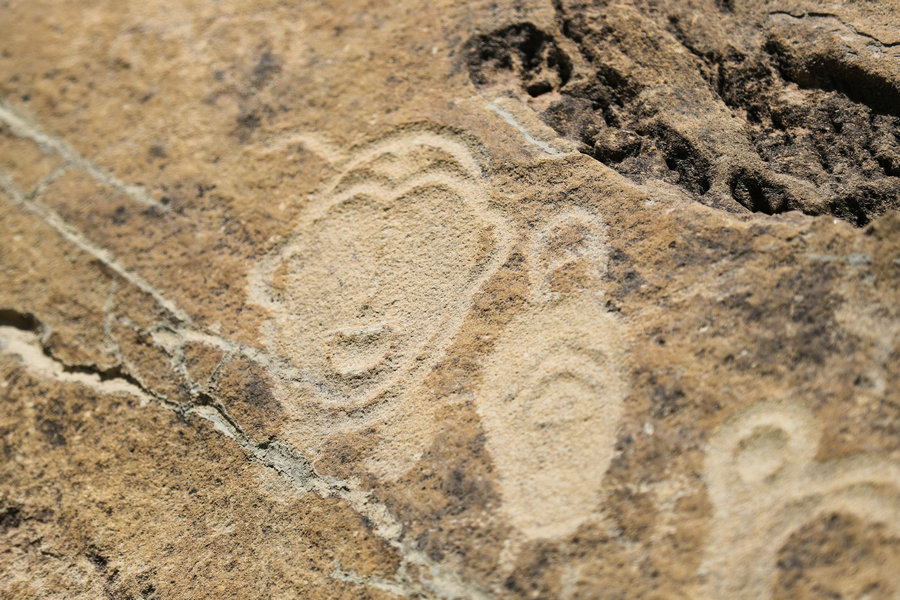
Helan Mountain Rock Art
Introduction
The Helan Mountain Rock Art is an extraordinary collection of ancient petroglyphs located on the eastern slopes of Helan Mountain, which spans several provinces in Northwest China, including the Ningxia Hui autonomous region. These rock carvings are a rich tapestry of ancient nomadic life, representing a significant cultural heritage that dates back thousands of years. They provide crucial insights into the lives of ancient peoples, spanning from around 3,000 to 10,000 years ago.
Historical and Cultural Context
Rock art is an ancient form of expression, serving as an "encyclopedia" of the lives and beliefs of early humans. The Helan Mountain Rock Art is a remarkable testament to the creativity and ingenuity of ancient societies. The carvings primarily depict scenes of daily life, including hunting, rituals, dancing and warfare, as well as various flora and fauna. These images offer a window into the past, allowing modern observers to glimpse the cultural and social practices of ancient nomadic communities.
The rock art in the Ningxia Hui autonomous region is particularly notable for its depiction of the sun god, animals and characters from the Xixia Dynasty (1038-1227). The artistry reflects the diverse influences that converged at Helan Mountain due to its geographical location, which spans multiple provinces and served as a crossroads for different cultures and societies.
Artistic Characteristics
The artistic characteristics of Helan Mountain rock art are distinguished by their intricate designs and symbolic representations. The petroglyphs are etched into the rock surfaces with great precision, showcasing detailed imagery that captures the essence of ancient life. These carvings are more than mere artistic expressions; they are a vital communication tool that conveyed important information and stories from generation to generation.
The diversity in themes and styles across different regions of Helan Mountain highlights the rich tapestry of cultural influences that have left their mark on this site. The depictions of animals, for example, range from realistic portrayals to more abstract forms, illustrating the varying artistic conventions and symbolic meanings attributed to these creatures by different groups.
Scientific Preservation Efforts
Preserving the Helan Mountain Rock Art is a complex and ongoing endeavor that involves scientific methods to protect these ancient carvings from environmental and human-induced threats. Conservationists employ a range of techniques to ensure the longevity of the petroglyphs, including detailed documentation, environmental monitoring and protective measures to prevent damage from weathering and vandalism.
The use of modern technology, such as 3D scanning and digital archiving, plays a crucial role in the preservation efforts. These technologies enable researchers to create accurate replicas of the rock art, allowing for detailed study and analysis without risking damage to the original carvings. Additionally, virtual reality experiences are being developed to provide immersive access to the rock art for educational and research purposes.
The Helan Mountain Rock Art stands as a monumental record of ancient human expression and interaction with the natural world. Its preservation and study continue to provide valuable insights into the cultural history of the region and the broader narrative of human development.








